Shoulder Pain Explained
Shoulder Pain Explained: Common Causes, Why It Happens, and How Physical Therapy Can Help You Recover Without Surgery
Shoulder pain is one of the most common musculoskeletal problems affecting active adults, athletes, workers, and even people who simply sleep in the wrong position. Whether your pain started gradually from years of wear and tear or suddenly after lifting, throwing, falling, or exercising, shoulder pain can make everyday activities frustrating and painful.
At Faith in Motion Performance Therapy, we help people in Hurricane and the surrounding areas recover from shoulder injuries, avoid unnecessary surgery, and get back to the activities they love.
In this article, we’ll break down:
How the shoulder works
Common causes of shoulder pain
Why shoulder pain often becomes chronic
The role of physical therapy in recovery
Why many people should try PT before imaging, injections, or surgery
Understanding the Shoulder: Why It’s So Easy to Injure
The shoulder is one of the most mobile joints in the body. Unlike the hip, which is designed for stability, the shoulder sacrifices stability for movement. This allows you to reach overhead, throw, lift, press, and rotate your arm in nearly every direction.
The downside? Mobility comes with increased injury risk.
Your shoulder is made up of:
The ball-and-socket joint
The rotator cuff muscles
The labrum
Tendons and ligaments
The shoulder blade (scapula)
The upper back and rib cage
When one part of this system is not functioning properly, the entire shoulder can become irritated, weak, stiff, or painful.
Many people assume shoulder pain automatically means a torn rotator cuff or major injury, but that is often not the case.
Common Causes of Shoulder Pain
Rotator Cuff Tendinopathy
The rotator cuff consists of four muscles that stabilize and move the shoulder. Repetitive lifting, throwing, pressing, or overhead activities can overload these tendons over time.
Symptoms often include:
Pain reaching overhead
Pain sleeping on the shoulder
Weakness with lifting
Pain with workouts or sports
This is one of the most common shoulder conditions we treat in physical therapy.
Shoulder Impingement
Shoulder impingement occurs when tissues become irritated or compressed during arm movement. Poor shoulder mechanics, weakness, posture issues, and repetitive movement patterns commonly contribute.
People often notice:
Sharp pain lifting the arm
Pinching sensations
Pain during pressing movements
Difficulty with overhead activity
Labral Injuries
The labrum is cartilage that helps stabilize the shoulder socket. Athletes involved in throwing sports, weightlifting, or contact sports may develop labral irritation or tears.
Symptoms can include:
Clicking or catching
Instability
Deep shoulder pain
Pain during throwing or pressing
Not every labral tear requires surgery. In fact, many people improve significantly with proper strengthening and movement retraining.
Frozen Shoulder (Adhesive Capsulitis)
Frozen shoulder causes progressive stiffness and pain, often making even simple movements difficult.
Common risk factors include:
Diabetes
Prolonged immobilization
Previous injury
Age 40-60
Physical therapy plays a major role in restoring mobility and reducing pain during recovery.
Shoulder Instability
Some individuals naturally have loose joints, while others develop instability after dislocations or repetitive overhead sports.
Symptoms may include:
Feeling like the shoulder slips
Recurrent dislocations
Weakness
Apprehension with certain movements
Physical therapy helps improve muscular control and dynamic stability to reduce stress on the joint.
Neck-Related Shoulder Pain
Not all shoulder pain actually comes from the shoulder.
Cervical spine issues can refer pain into the shoulder and arm, causing:
Burning pain
Tingling or numbness
Weakness
Pain traveling down the arm
A thorough physical therapy evaluation helps determine whether the true source of symptoms is the shoulder, neck, or both.
Why Imaging Isn’t Always the First Step
Many people assume they need an MRI immediately after shoulder pain begins. While imaging can sometimes be helpful, research consistently shows that MRI findings do not always correlate with pain.
Studies have found that many people without shoulder pain still have:
Rotator cuff tears
Labral tears
Arthritis
Tendon degeneration
These findings are often normal age-related changes rather than the true cause of symptoms.
Imaging too early can sometimes:
Increase fear and anxiety
Lead to unnecessary injections or surgery
Cause people to avoid movement
Shift focus away from improving strength and function
For many non-traumatic shoulder injuries, conservative treatment with physical therapy is recommended first.
Why Physical Therapy Should Often Come Before Surgery
One of the biggest misconceptions about shoulder pain is that surgery is the fastest path to recovery.
In reality, many shoulder conditions respond extremely well to conservative care.
Physical therapy helps address:
Weakness
Mobility restrictions
Poor movement mechanics
Muscle imbalances
Joint stiffness
Overload from activity or sport
At Faith in Motion Performance Therapy, we focus on identifying the root cause of shoulder pain rather than simply chasing symptoms.
Our goal is not just temporary pain relief. We want to:
Restore strength
Improve resilience
Correct movement dysfunction
Help you confidently return to sports, lifting, work, and daily life
Many patients are surprised to learn that pain reduction is only the first phase of rehab. Long-term recovery requires rebuilding the capacity of the shoulder to handle real-life demands again.
What Physical Therapy for Shoulder Pain Looks Like
Every shoulder injury is different, but treatment often includes:
Manual Therapy
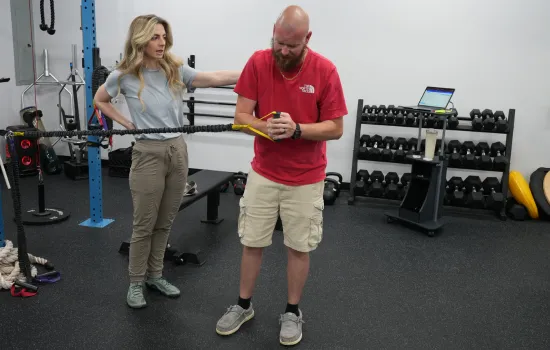
Hands-on techniques to improve mobility and reduce irritation.
Strength Training
Targeted exercises for the rotator cuff, scapular muscles, upper back, and core.
Mobility Work
Improving flexibility and joint motion where needed.
Movement Retraining
Correcting lifting, pressing, throwing, or reaching mechanics.
Return-to-Sport or Activity Progressions
Gradually rebuilding tolerance for workouts, sports, and work tasks.
Effective rehab should be progressive and individualized — not just heat, stim, and generic band exercises.
When Should You See a Physical Therapist for Shoulder Pain?
You should consider seeing a physical therapist if:
Shoulder pain has lasted more than 1-2 weeks
Pain is limiting workouts or sports
You have pain sleeping
You feel weak or unstable
You cannot lift overhead comfortably
Pain keeps returning
You want to avoid injections or surgery if possible
Early intervention often leads to faster recovery and prevents small issues from becoming chronic problems.
The Bottom Line
Shoulder pain can feel overwhelming, especially when it limits your workouts, sleep, work, or ability to stay active. But pain does not automatically mean surgery is necessary.
Many shoulder conditions improve significantly with the right physical therapy program focused on movement quality, strength, mobility, and long-term resilience.
If you’re struggling with shoulder pain and want answers beyond rest, pain medication, or temporary fixes, our team at Faith in Motion Performance Therapy is here to help.
We help active adults and athletes in Hurricane get back to doing what they love with confidence.
Ready to Get Started?
Visit Faith in Motion Performance Therapy to schedule an evaluation and learn how physical therapy can help you recover from shoulder pain naturally and effectively.